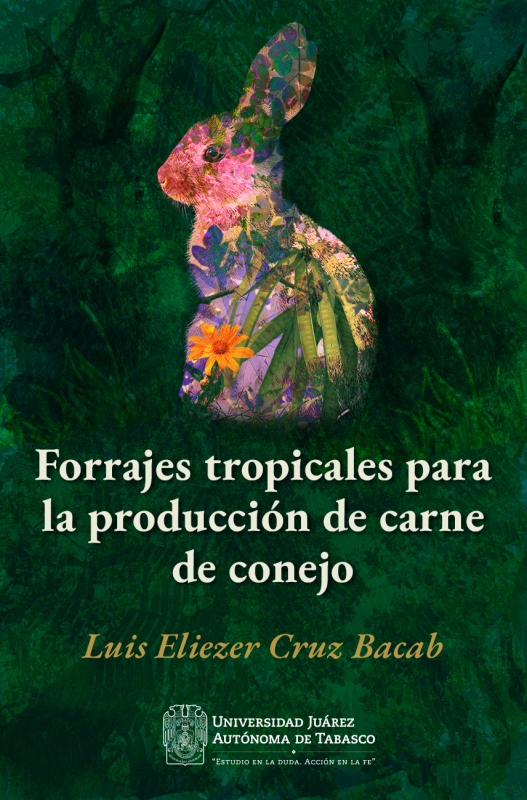
Forrajes tropicales para la producción de carne de conejo
Palabras clave:
Forrajes, Conejo, ciencias agropecuarias, cuniculturaSinopsis
El presente libro tiene como objetivo presentar las características anatómicas –fisiológicas del tracto digestivo del conejo–, así como describir brevemente las especies vegetales y forrajeras que han sido estudiadas para la alimentación de conejos criados para la producción de carne en las zonas tropicales. Finalmente se analizan los efectos de esta alimentación sobre la calidad y características de la carne de conejo.
Descargas
Referencias
Abonyi F. O., Iyi E. O., Machebe N. S. (2012). Effects of feeding sweet potato (Ipomea batatas) leaves on growth performance and nutrient digestibility of rabbits. African Journal of Biotechnology, 11(15), 3709–3712. https://doi.org/10.5897/ajb11.3103
Abu, A. H., Ahemen, T., Ikpechukwu, P. (2013). Testicular morphometry and sperm quality of rabbit bucks fed graded levels of Moringa oleifera leaf meal. Agrosearch, 13, 49–56. https://doi.org/10.4314/agrosh.v13i1.5
Adeniji, A. A., Lawal, M. (2012). Effects of replacing groundnut cake with Moringa oleifera leaf meal in the diets of grower rabbits. International Journal of Molecular Veterinary Research, 2(3), 8–13. https://doi.org/10.5376/ijmvr.2012.02.0003
Aderinboye R. Y., Oldaeji O. T., Abaire M. A., Sobayo R. A., Oso A. O., Oni A. O., Yusuf K. O., Osho S. O., Bamgbose A. M. (2015). Performance of weaner rabbits fed concentrate diet supplemented with pawpaw leaves. Tropical Animal Health and Production, 47, 323–329. https://doi.org/10.1007/s11250-014-0723-1
Aduku A. O. (2005). Tropical Feedstuff Analysis Table. Department of Animal Science, Faculty of Agriculture, Ahmadu Bello University, Samaru-Zaria, Nigeria.
Agbede J. O., Aletor V. A. (2004). Chemical characterization and protein quality evaluation of leaf protein concentrates from Glyricidia sepium and Leucaena leucocephala. International Journal of Food Science and Technology, 39(3), 253–261. https://doi.org/10.1111/j.1365-2621.2004.00779.x
Ajit, P. R. K., Sharma, R. K., Barman, K. (2010). Effect of replacement of concentrate mixture with isonitrogenous leaf meal mixture on growth, nutrient utilization and rumen 71 fermentation in goats. Small Ruminant Research, 91(92–3), 132–140. https://doi.org/10.1016/j.smallrumres.2010.02.012
Akoutey, A., Kpodekon, M. T., Bannelier, C., y Gidenne, T. (2012). Nutritive value of sun-dried Pueraria phaseoloides for rabbits under tropical conditions. World Rabbit Science, 20(4), 209–213. https://doi.org/10.4995/wrs.2012.1230
Alemede, I. C., Onyeji, E. A., Tsado, D. N., Shiawoya, E. L. (2014). Reproductive response of rabbit does to diets containing varying levels of horseradish (Moringa oleifera) leaf meal. Journal of Biology, Agriculture and Healthcare, 4(19),62–68.
Aliyu, Y. (2019). Evaluation of the feeding potentials of Amaranthus stems and F. Thoningii foliage as supplements to concentrate diets for weaner rabbits. American Journal of Biomedical Science and Research, 1(6), 231–233. https://doi.org/10.34297/AJBSR.2019.01.000551
Alli-Balogun, J. K., Nwanta, J. A. (2003). Comparative evaluation of some crop residues on rabbit performance, Sokoto Journal of Veterinary Sciences, 5(2), 7–9. http://www.sokvetjournal.net
Amaglo, N. K., Timpo, G. M., Ellis, W. O., Bennett, R. N. (2007). Effect of spacing and harvest frequency on the growth and leaf yield of moringa (Moringa oleifera Lam.), a leafy vegetable crop. Ghana J. Hort., 6, 33–40.
Amata, I. A. (2010). The effect of feeding Gliricidia leaf meal (GLM) on the haematological, serological and carcass characteristics of weaned rabbits in the tropics. Agriculture and Biology Journal of North America, 1(5), 1057–1060. https://doi.org/10.5251/abjna.2010.1.5.1057.1060
Amata, I. A. y Bratte, L. (2008). The effect of partial replacement of Soybean Meal with Gliricidia Leaf Meal on the performance and organ weights of weaner rabbits in the tropics. Asian 72 Journal of Animal and Veterinary Advances, 3(3), 169–173. https://doi.org/10.3923/ajava.2008.169.173
Assan, N. (2018). Carcass traits and meat quality properties as affected by nutritional programs and feeding patterns in a rabbit enterprise. Scientific Journal of Animal Science, 7(1), 459–470.
Ayala, A. y Sandoval, S. M. (1995). Establishment and forage production during five years of Brosimum alicastrum Swartz in high density planting in northern Yucatan, Mexico. Agroforestería en las Américas, (7), 10–16.
Ayodele, A. E., Adeola, J. R. y Mayowa, A. T. (2014). Reproductive performance of rabbit does fed graded levels of Moringa oleifera leaf meal based diet. International Journal of Sciences, 3(3), 50–53.
Carabaño, R., Piquer, J., Menoyo, D. y Badiola, I. (2010). The digestive system of the rabbit. En C. De Blas y J. Wiseman (Eds.), Nutrition of the Rabbit (2a ed., pp. 1–18). CABI.
Castellanos Echeverría, F. (2010). Manuales para la producción agropecuaria: Conejos. SEP, Trillas.
Chávez-Quintal, P., González-Flores, T., Rodríguez-Buenfil, I. y Gallegos-Tintoré, S. (2011). Antifungal activity in ethanolic extracts of Carica papaya L. cv. Maradol leaves and seeds. Indian Journal of Microbiology, 51(1), 54–60. https://doi.org/10.1007/s12088-011-0086-5
Chisowa, D. M. y Mwenya, J. (2013). Evaluation of Leucaena leucocephala, Calliandra calothyrsus, Gliricidia sepium and Sesbania sesban leaves as basal feeds for growing rabbits (Oryctolagus cuniculus). European Academic Research, 1(8), 1935–1952.
Cofnas, N. (2018). Is vegetarianism healthy for children? Critical Reviews in Food Science and Nutrition, 59(13), 2052-2060. https://doi.org/10.1080/10408398.2018.1437024
Colin, M., Xi, C. y Prigent, A. Y. (2012). The enrichment of rabbit feeds with long and short chains omega 3 fatty acids: An opportunity for the producer and the consumer. Cuniculture Magazine, 39, 33–43.
Combes, S., Michelland, R. J., Monteils, V., Cauquil, L., Soulié, V., Tran N. U., Gidenne. T., Fortun-Lamothe, L. (2011). Postnatal development of the rabbit caecal microbiota composition and activity. FEMS Microbiology Ecology, 77(3), 680–689. https://doi.org/10.1111/j.1574-6941.2011.01148.x
Contino, Y., Ojeda, F. y Herrera, R. (2008). Evaluación del consumo de morera fresca (Morus alba) en reproductoras porcinas mestizas. Pastos y Forrajes, 31(3), 293–302.
Dahouda, M., Adjolohoun, S., Senou, M., Toleba, S. S., Abou, M., Vidjannagni, D. S., Kpodékon, M. y Youssao, A. K. I. (2013). Effects of diets containing Moringa oleifera Lam leaf and commercial feed on rabbit (Oryctolagus cuniculus) growth performance and meat quality. International Journal of Biological and Chemical Sciences, 7(5), 1838–1852.
Dalle Zotte, A. y Szendrő, Z. (2011). The role of rabbit meat as functional food. Meat Science, 88(3), 319–331. https://doi.org/10.1016/j.meatsci.2011.02.017
Djakalia, B., Guichard, B. L. y Soumaila, D. (2011). Effect of Moringa oleifera on growth performance and health status of young post-weaning rabbits. Research Journal of Poultry Sciences, 4(1), 7–13. https://doi.org/10.3923/rjpscience.2011.7.13
Doan, T. G., Khuc, T. H., Dinh, V. B. y Nguyen, T. M. (2006). Effect of Guinea grass on feed intake, digestibility and growth performance of rabbits fed a molasses block and either water spinach (Ipomoea aquatica) or sweet potato (Ipomoea batatas L.) vines. Workshop on Forages for Pigs and Rabbits, MEKARN-CelAgrid, 21–24.
Ekpo, J. S. (2021). Carcass quality and economic benefit of New Zealand White rabbit bucks fed processed Mucuna pruriens. Nigerian Journal of Animal Production, 48(3), 100–110. https://doi.org/10.51791/njap.v48i3.2975
Ewuola, E. O., Jimoh, O. A., Atuma, O. V. y Soipe, O. D. (2012). Growth indices and apparent nutrient digestibility in rabbits fed graded levels of moringa (Moringa oleifera) leaf meal. Nigerian Journal of Animal Science, 14(1), 92–100.
Fasae, O. A., Alokan, J. A. y Onibi, G. E. (2005). Feed intake and digestibility in Yankasa sheep fed diets containing varying levels of Leucaena leucocephala leaf residues. Nigerian Journal of Animal Production, 32(1), 88–93. https://doi.org/10.51791/njap.v32i1.1047
Fayemi, P. O., Onwuka, C. F. I., Isah, O. A., Jegede, A. V., Arigbede, O. M. and Muchenje, V. (2011). Effects of mimosine and tannin toxicity on rabbits fed processed Leucaena leucocephala (Lam) De Wit. Leaves. African Journal of Agricultural Research, 6(17), 4081–4085. https://doi.org/10.5897/AJAR11.327
Franck, Y. K., Athanase, O. K., Flavienne, W. L. R. M., Anselme, K. K. y Sébastien, N. (2016). Growth parameters, protein digestibility and health status of rabbit Oryctolagus cuniculus fed with palatable leafy vegetables. European Scientific Journal, 12(27), 191–204.
García, A., Córdova Rodríguez, L. E., Urpín, L. A., Méndez Natera, J. R. y Malavé Acuña, A. C. (2012). Propiedades fisicoquímicas de la carne de conejos suplementados con follaje de Gliricidia sepium y fibra de Elaeis guineensis. Revista Científica UDO Agrícola, 12(4), 939–946.
Gargiulo, A. M., Ceccarelli, P. y Pedini, V. (1996). The presence of granular excretory ducts in the rabbit zygomatic gland. Anatomia, Histologia, Embryologia, 25(3), 175–176. https://doi.org/10.1111/j.1439-0264.1996.tb00079.x
Ghosh, S. K.; Datt, C.; Singh, N. P.; Ngachan, S. V. (2008). Broiler rabbit production in Tripura. In: N. P. Sing (Ed.), lCAR publication N°30, Tripura, India.
Hebert, U., Ozoje, M. y Adejumo, D. (2005). Effect of leucaena and gliricidia leaf meal on the seminal characteristics, testis weights and seminiferous tubule diameters of rabbits. Animal Research, 54(3), 173–178. https://doi.org/10.1051/animres:2005017
Henry, A. J., Udie G. U., Ozung, P. O., Anya, M.I. (2018). Hormonal assay and reproductive performance of rabbits fed paw paw (Carica papaya) leaves as feed suplement. Annual Research and Review in Biology, 25(3), 1–9. https://doi.org/10.9734/ARRB/2018/36914
Ibrahim, H. (2019). Carcass characteristics of rabbits fed different forages as supplement. Nigerian Journal of Animal Production, 46(5), 96–101.
Ibrahim, M. A., Holmann, F., Hernandez, M., and Camero, A. (2000). Contribution of Erythrina protein banks and rejected bananas for improving cattle production in the humid tropics. Agroforestry Systems, 49, 245–254. https://doi.org/10.1023/A:1006379427315
Isah, O. A., Omorogiuwa, L. E. y Akinnusi, A. O. (2007). Proximate, mineral and fibre composition of some common browse plants eaten by free roam village goats in Edo State. Proceedings of the 32nd Annual Conference of the Nigerian Society for Animal Production, Calabar.
Isitua, C. C. y Ibeh, I. N. (2013). Toxicological assessment of aqueous extract of Moringa oleifera and Caulis bambusae leaves in rabbits. Journal of Clinical Toxicology, S12(003), 1–6. https://doi.org/10.4172/2161-0495.S12-003
Iyeghe-Erakpotobor, G. T. (2007). Effect of concentrate and forage type on performance and digestibility of growing rabbits under sub-humid tropical conditions. Asian Journal of Animal and Veterinary Advances, 2(3), 125–132. https://doi.org/10.3923/ajava.2007.125.132
Jiménez-Ferrer, G., Luna, E. P., Soto-Pinto, L. y Kú-Vera, J. (2015). Effects of local energy sources on the “in situ” digestibility and ruminal kinetic of Erythrina poeppigiana foliage in a silvopastoral system. International Journal of Agricultural Innovations and Research, 4(2), 264–269.
Jiwuba, P. C. (2018). Effect of pawpaw (Carica papaya) leaf meal on productive parameters of growing rabbits. Agricultural Science and Technology, 10(2), 102–106. https://doi.org/10.15547/AST.2018.02.022
Kaga, I. B. (2013). Biological and carcass characteristics of rabbits fed Delonix regia meal diets. Biological Systems: Open Access, 2(4), 120. https://doi.org/10.4172/2329-6577.1000120
Kimsé, M., Yapi, Y. M., Karamoko, M., Gidenne, T., Zongo, M., Gnanda, B. I., Akoutey, A., Bodji N. C., Fantodji A., Otchoumou A. (2017). Effect of tropical green forage Pueraria phaseoloides addition to a pelleted complete feed on rabbit growth performance and digestion. World Rabbit Science, 25, 225–231. https://doi.org/10.4995/wrs.2017.5126
Kú-Vera, J. C., Ayala-Burgos, A. J., Solorio-Sánchez, F. J., BriceñoPoot, E. G., Ruiz-González, A., Piñeiro-Vázquez, A. T. y Chay-Canul, A. J. (2013). Tropical tree foliages and shrubs as feed additives in ruminant rations. Nutritional Strategies of Animal Feed Additives (pp. 59–76). Nova Science Publishers.
Kumar, N., Soorianathasundaram, K., Meenakshi, N., Manivannan, M. I., Suresh, J. y Nosov, V. (2008). Balanced fertilization in papaya (Carica papaya L.) for higher yield and quality. II International Symposium on Papaya, 851, 357–362.
Lebas, F. (2013). Feeding strategies for small and medium scale rabbit units. 3rd Conference of the Asian Rabbit Production Association, 1–15.
Magouze, F. I., Mahmoud, S. A., El-Kelawy, H. M., Homouda, I. A. y Alla, S. A. Z. G. (1998). Productive and reproductive performance of rabbits fed diets containing different agricultural by-products: 2. Reproductive performance of male and female rabbits. Egyptian Journal of Rabbit Science, 8(1), 61–68.
Mailafia, S., Onakpa, M. M. y Owoleke, O. E. (2010). Problems and prospects of rabbit production in Nigeria-A review. Bayero Journal of Pure and Applied Sciences, 3(2), 20–25. https://doi.org/10.4314/bajopas.v3i2.63213
Makinde, O. J. (2016). Growth performance, carcass yield and blood profile of growing rabbits fed concentrate diet supplemented with white lead tree (Leucaena leucocephala) or siratro (Macroptilium atropurpureum) leaves in north central Nigeria. Trakia Journal of Sciences, (1), 80–86. https://doi.org/10.15547/tjs.2016.01.011
Martínez-Yañez, R., Santos-Ricalde, R., Ramírez-Avilés, L. y Sarmiento-Franco, L. (2010). Utilización de Ramón (Brosimum alicastrum) y Cayena (Hibiscus rosa-sinensis) en la alimentación de conejos. Zootecnia Tropical, 28(2), 153–161. https://scielo.org
Medugu, C. I., Mohammed, G., Raji, A. O., Barwa, E. & Zhinma, A. (2012). Utilization of different forages by growing rabbits. Int J Adv Biol Res, 2(3), 375–381.
Nieves, D., Terán, O., Cruz, L., Mena, M., Gutiérrez, F. y Ly, J. (2011). Digestibilidad de nutrientes en follaje de árnica (Tithonia diversifolia) en conejos de engorde. Tropical and Subtropical Agroecosystems, 14(1), 309–314. http://www.redalyc.org/articulo.oa?id=93915703030
Nistor, E., Bampidis, V. A., Păcală, N., Pentea, M., Tozer, J. y Prundeanu, H. (2013). Nutrient content of rabbit meat as compared to chicken, beef and pork meat. Journal of Animal Production Advances, 3(4), 172–176. https://doi.org/10.5455/japa.20130411110313
Nouman, W., Basra, S. M. A., Siddiqui, M. T., Yasmeen, A., Gull, T. y Cervantes Alcayde, M. A. (2014). Potential of Moringa oleifera L. as livestock fodder crop: A review. Turkish Journal of Agriculture and Forestry, 38(1), 1–14. https://doi.org/10.3906/tar-1211-66
Odetola, O. M., Adetola, O. O., Ijadunola, T. I., Adedeji, O. Y. y Adu, O. A. (2012). Utilization of moringa (Moringa oleifera) leaves meal as a replacement for soya bean meal in rabbit’s diets. Journal of Agricultural and Food Sciences, 2(12), 309–313.
Ola, S. I. y Olatunbosun, O. S. (2013). Effect of buck presence on sexual receptivity and kindling performance of rabbit doe. Livestock Research for Rural Development, 25(8), Artículo 135. https://www.lrrd.org/lrrd25/8/ola25135.html
Oloruntola, O. D., Agbede, J. O., Ayodele, S. O., Ayedun, E. S., Daramola, O. T., Oloruntola, D. (2018). Gliricidia leaf meal and multi-enzyme in rabbits diet: effect of performance, blood índices, serum metabolites and antioxidant status. Journal of Animal Science and Technology, 60, 24. https://doi.org/10.1186/s40781-018-0182-8
Oloruntola, O. D., Daramola, O. T., & Omoniyi, S. O. (2015). Effect of forages on performance, carcass cuts and haematological profile of weaner rabbits. Archivos de Zootecnia, 64(245), 87–92. http://www.redalyc.org/articulo.oa?id=49538689015
Onwudike, O. C. (1995). Use of the legume tree crops Gliricidia sepium and Leucaena leucocephala as green feeds for growing rabbits. Animal Feed Science and Technology, 51(1-2), 153–163. https://doi.org/10.1016/0377-8401(94)00643-N
Onwuka, C. F. I. (1992). Tannin and saponin contents of some tropical browse species fed to goats. Trop. Agric. Trinidad, 69, 176–180.
Osei, D. Y., Apori, S. O. y Osafo, E. L. K. (2012). Rabbit production in selected urban areas of southern Ghana: Status and implications for policy and research. Animal Production, 14(2), 131–139.
Owen, O. J., Alikwe, P. C. N. y Okidim, I. A. (2013). The economic potential of compounding rabbit diets with graded levels of Moringa oleifera leaf meal. Journal of Environmental Issues and Agriculture in Developing Countries, 5(2), 34–40. https://icidr.org.ng/index.php/jeiadc/article/view/232
Owoleke, O. E., Tanimomo, B. K., Adama, T. Z., Akanya, H. O., Alemede, I. C., Adeiza, M. A. y Kolawole, V. O. (2016). Feed evaluation and growth performance of rabbits fed diets containing different forages. Vom Journal of Veterinary Science, 11, 106–111.
Radovich, T. (2013). Farm and forestry production and marketing profile for Moringa. Permanent Agriculture Resources. http://agroforestry.net
Raharjo, Y. C. y Cheeke, P. R. (1985). Palatability of tropical tree legume forage to rabbits. Nitrogen Fixing Tree Research Reports, 3, 31–32.
Rahman, M. M., Mustapher, M. N. B., Mat, K. B., Utamy, R. F. y Nor, M. M. (2020). Effect of substituting concentrate with dwarf Napier grass (Pennisetum purpureum) on intake, growth and carcass composition of rabbits. Hasanuddin Journal of Animal Science (HAJAS), 2(1), 1–8.
Rasinska, E., Czarniecka-Skubina, E. y Rutkowska, J. (2018). Fatty acid and lipids contents differentiation in cuts of rabbit meat. Journal of Food, 16(1), 807–813. https://doi.org/10.1080/19476337.2018.1488000
Reyes-Sánchez, N., Spörndly, E. y Ledin, I. (2006). Effect of feeding different levels of foliage of Moringa oleifera to Creole dairy cows on intake, digestibility, milk production and composition. Livestock Science, 101(1-3), 24–31. https://doi.org/10.1016/j.livprodsci.2005.09.010
Ruckebusch, Y. y Fioramonti, J. (1976). The Fusus coli of the rabbit as a pacemaker area. Experientia, 32(8), 1023–1024. https://doi.org/10.1007/BF01933949
Safwat, A. M., Sarmiento-Franco, L., Santos-Ricalde, R. y Nieves, D. (2014a). Determination of tropical forage preference using two offering methods in rabbits. AsianAustralasian Journal of Animal Sciences, 27(4), 524–529. https://doi.org/10.5713/ajas.2013.13163
Safwat, A. M., Sarmiento-Franco, L., Santos-Ricalde, R. y Nieves, D. (2014b). Rabbit production using local resources as feedstuffs in the tropics. Tropical and Subtropical Agroecosystems, 17(2), 161–171. https://doi.org/10.56369/tsaes.2025
Safwat, A. M., Sarmiento-Franco, L., Santos-Ricalde, R. y Nieves, D. (2014c). Effect of dietary inclusion of Leucaena leucocephala or Moringa oleifera leaf meal on performance of growing rabbits. Tropical Animal Health and Production, 46(7), 1193–1198. https://doi.org/10.1007/s11250-014-0626-1
Sánchez-Laiño, A., Torres-Navarrete, E. D., Buste-Castro, F., Barrera-Álvarez, A. y Sánchez-Torres, J. (2018). Tropical forages as a dietary alternative in fattening rabbits (Oryctolagus cuniculus). Acta Agronómica, 67(2), 333–338. https://doi.org/10.15446/acag.v67n2.59220
Saulawa, L. A., Sabo, M. N. y Garba, M. G. (2015). Performance of weaner rabbits fed diets supplemented with paw paw (Carica papaya) leaf meal. Scientific Journal of Animal Science, 4(12), 187–191.
Snipes, R. L., Clauss, W., Weber, A. y Hörnicke, H. (1982). Structural and functional differences in various divisions of the rabbit colon. Cell and Tissue Research, 225(2), 331–346. https://doi.org/10.1007/BF00214686
Sultana, N., Alimon, A. R., Haque, K. S., Sazili, A. Q., Yaakub, H. y Hossain, S. M. J. (2014). The effect of cutting interval on yield and nutrient composition of different plant fractions of Moringa oleifera tree. Journal of Food, Agriculture and Environment, 12(2), 599–604.
Taiwo, A. A., Adejuyigbe, A. D., Adebowale, E. A., Oshotan, J. S. y David, O. O. (2005). Performance and nutrient digestibility of weaned rabbits fed forages supplemented with concentrate. Nigerian Journal of Animal Production, 32(1), 74–78. https://doi.org/10.51791/njap.v32i1.1042
Tang, M., Hendricks, A. E. y Krebs, N. F. (2018). A meat- or dairybased complementary diet leads to distinct growth patterns in formula-fed infants: A randomized controlled trial. The American Journal of Clinical Nutrition, 107(5), 734–742. doi.org
Teye, M., Badu, R., Boateng, E. A. y Hagan, J. K. (2020a). Growth, carcass and meat characteristics of local breed of rabbits fed diets containing soaked and dried mango (Mangifera indica) seed kernel meal. African Journal of food agriculture, nutrition and development, 20,(2), 15695–15708.
Teye, M., Barku, V. Y. y Hagan, J. K. (2020b). Fatty acids profile, carcass and meat quality attributes of rabbit breeds in Ghana fed diets with graded levels of palm (Elaeis guineensis) Kernel Oil residues. Advances in Animal and Veterinary Sciences, 8(10), 1091–1099. doi.org
Thiam, M., Tovignon, G. C. Z., Touré, A. I., Kimsé, M., Obiang, C. S., Mboko, A. V. y Tedonkeng, E. P. (2021). Effects of incorporation levels of Pueraria phaseoloides leaf flour on carcass characteristics and chemical composition of meat from local rabbit (Oryctolagus cuniculus) in South-East Gabon. International Journal of Biological and Chemical Sciences, 15(3), 869–878. doi.org
Tripathi, M. K., Mishra, A. S., Mondal, D., Misra, A. K., Prasad, R. y Jakhmola, R. C. (2008). Caecal fermentation characteristics, blood composition and growth of rabbits on substitution of soya-bean meal by unconventional high-glucosinolate mustard (Brassica juncea) meal as protein supplement. Animal, 2(2), 207–215. doi.org
Uza, O., Ayoade, J. A., Shaahu, D. T., Ahamefule, F. O. y Yusuf, T. (2020). Dried grass meal in weaner rabbits: Effect on growth and carcass characteristics. Nigerian Journal of Animal Science and Technology, 3(1), 22–28.
Vantsawa, P. A. y Daramola, A. (2014). The effect of Moringa oleifera leaf meal (MOLM) on the hematological parameters and the cholesterol level of rabbits. American Journal of Biological, Chemical and Pharmaceutical Sciences, 2(3), 1–6.
Vergara, H., Berruga, M. I. y Linares, M. B. (2005). Effect of gas composition on rabbit meat quality in modified atmosphere packaging. Journal of the Science of Food and Agriculture, 85(11), 1981–1986. doi.org
Wiersum, K. F., Nitis, I. M. (1992). Gliricidia sepium (Jacq.) Kunth ex Walp. Record from Proseabase. Mannetje, L.’t and Jones, R.M. (Editors). PROSEA (Plant Resources of South-East Asia) Foundation, Bogor, Indonesia.
Descargas
Publicado
Categorías
Licencia

Esta obra está bajo una licencia internacional Creative Commons Atribución-NoComercial-SinDerivadas 4.0.